The second you open the notes app, you’ve left.
You’re still nodding. You might even still be saying the right small words. But a part of you is now a clerk, and the clerk is trying to get the sentence down before it dies, which means the clerk is not in the next sentence. I’ve done this standing up, phone low against my leg like I was being subtle. Nobody is fooled, including me. The conversation thins out the moment the logging starts. You can feel it in your own mouth. You start talking in conclusions so there’s something tidy to type.
The advice to “capture it in the moment” treats you like a reporter at your own life. Reporters are not in the scene. They’re beside it, with a job. You went to the room to be in the scene. The note is a different job, and doing both at once is how you do the worse version of each. The note comes out as “smart, follow up,” and the conversation comes out as you half-present, waiting for a line worth filing.
I tried the disciplined version for a stretch of events and hated the person I was at them. Thumb ready. Excuse to the side. A private taxonomy developing in real time: warm, maybe, skip. That taxonomy is a sales floor habit, and it leaks into your face. People can tell when they’re being entered into a system. They get shorter. You get a cleaner note and a worse night, which is a miserable exchange rate.
Be in the conversation. The record is a different moment.
This is not an argument for trusting your memory. Your memory will not hold the night. I’ve left rooms certain I’d remember a person and arrived home with a jacket and a mood. The fix is not to become your own secretary while they’re talking. The fix is to stop requiring a secretary at all. If the exchange itself leaves a record, you don’t have to step out of the sentence to build one.
What the record needs is still small. Who they were, which the page can carry. Where you were, which the event already is, if something bothers to keep it. Why it mattered, which is the one line that might still want a human. Even that line is better written after, in one sentence, than scribbled mid-thought while you’re pretending to listen. After is a bad time for a novel and a fine time for a line. During is a bad time for both.
I’m suspicious of products that put a note field in your face at the moment of meeting and call that capture. The field is an invitation to leave. A blank you feel guilty for not filling. You will fill it with “nice” because “nice” is what fits in the four seconds you’re willing to spend not looking at them. Nice is not a memory. It’s a placeholder that lets you close the sheet.
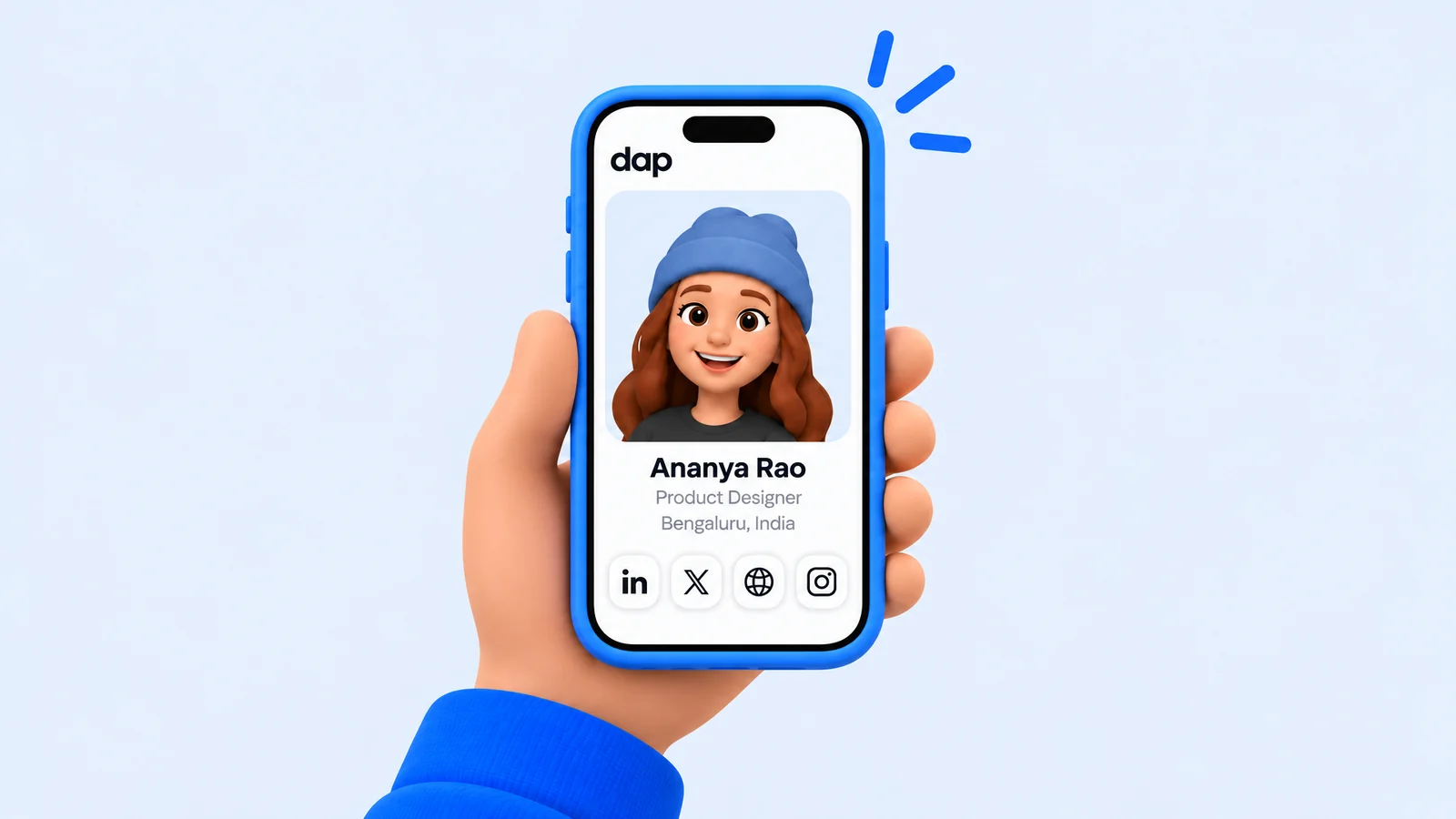
Dap’s version of this is that the page moves when the phones meet, and the meeting sits against the event, so the clerk’s job is mostly already done. You can set the page up before any of that. The in-room exchange is the app, and the app is not out. I’m not describing a mode you can toggle at dinner tonight. I’m describing why the note-taking advice keeps failing people who are actually good at talking. They follow it, and the talking gets worse, and then they blame their memory for a mess they made on purpose.
There’s a narrow case for a note. Someone tells you a fact you will harm them by forgetting: a name pronounced a certain way, a thing they asked you not to do, a promise with a date. Write that down. I’m not romantic about dropping promises. I’m romantic, if that’s the word, about not turning the whole conversation into a promise to your future filing cabinet. One fact is a note. A running log is an exit.
The people who are good at a room are often the worst at this advice, because the advice asks them to become worse at the room in exchange for a cleaner database. They feel the trade and they still take it, out of guilt. Guilt is a bad product manager. It will have you logging “nice” under someone you actually liked, just so the sheet isn’t empty when you look at it on the train.
Put the phone away. Stay for the next sentence, the one you were about to miss because you were saving the last one. If a tool can’t keep the meeting without asking you to leave it, the tool is the thing that doesn’t belong in the room.