You did not meet them in the abstract.
You met them at a dinner where the wine was too cold, or a demo day with a timetable you ignored, or a hallway that smelled like the carpet had been cleaned that afternoon and not quite dried. The room is the cue your memory gets without effort. It’s also the first thing a contact list throws away. The person lands under M, between your dentist and someone from a group chat, and the room is gone. Later you try to rebuild the room from a job title. Job titles are not rooms.
I keep a bad habit of remembering weeks as places. Tuesday was the long table. Wednesday was the room with the bad chairs. If I can get back to the table, I can often get back to the person, including the thing we argued about, which is usually the thing worth keeping. If I start from the alphabet I get a name and a company and a feeling that I’m doing archaeology on my own month. The archaeology is the design of the list. It was never going to hand you the room.
File them under where you were. The alphabet is a junk index.
This sounds obvious once you say it, and then you look at every tool that offers to “save the contact” and watch it do the opposite. Saving, in that dialect, means extracting a person from the context that made them memorable and storing the extraction. You are left with reachability. Email, phone, a link. Reachability is useful on the day you already know why you’re writing. It does nothing on the day you’re trying to remember whether to write at all.
Events are uneven, which is the point. A conference with two hundred people is a bad folder if you dump every badge scan into it and call that memory. I don’t think a shelf helps you if the shelf is a landfill. The dinner with nine people is a good folder. The hallway conversation that ran long is a good folder even if the official event around it was a blur. What matters is that the unit of storage matches the unit of memory. You remember nights and rooms and one conversation that detached from the schedule. You do not remember “contacts added in March.”
There’s a version of this that turns into calendar hygiene, and I want to dodge it. I’m not arguing for a color-coded life. I’m arguing against a system that pretends the meeting happened nowhere. If the only metadata you keep is a timestamp, you’ve kept the least human fact available. 9:41pm is not a place. The cold wine is a place. You will not type “cold wine” into a CRM, and you shouldn’t have to. The event name is enough of a hook if the person is actually attached to it.
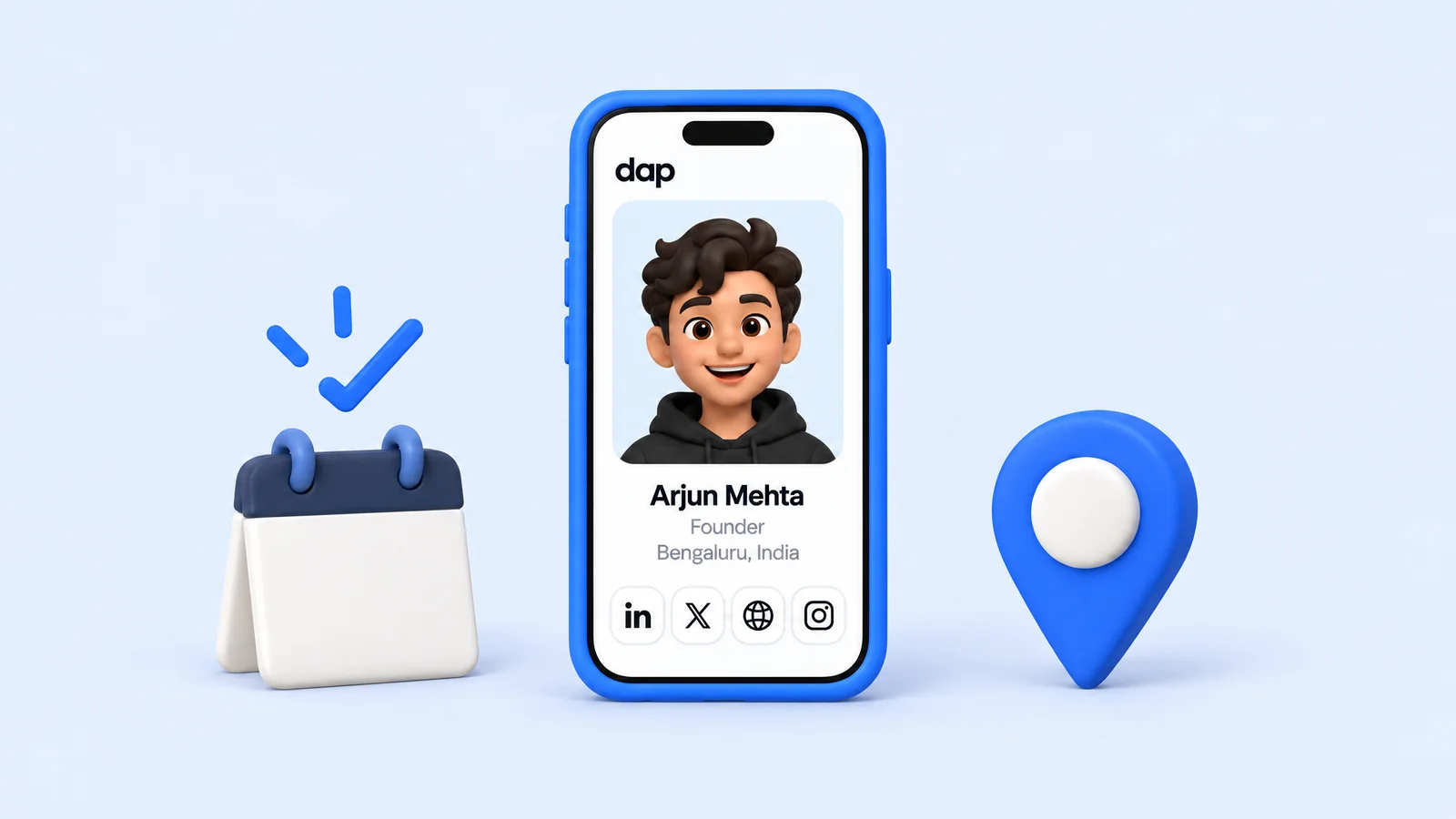
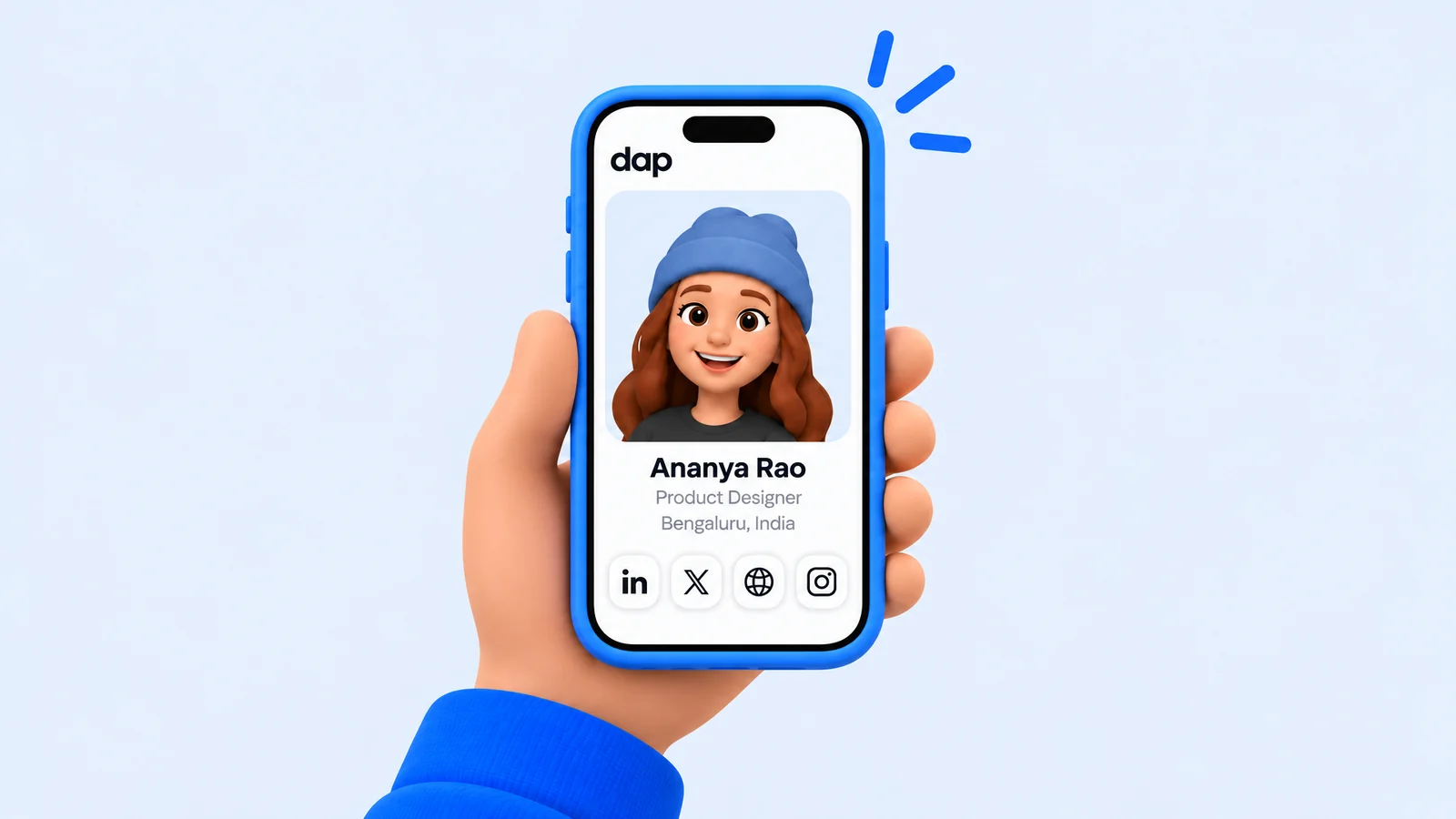
Dap files the connection under the event you met at, on purpose, because the room is the folder you already have in your head. The page of links is the thing that moves between you. You can put that page up now. Attaching the meeting to the event when the phones meet is the app, and that app has not shipped. Until it does, you can still feel the shape of the mistake every time a new contact appears with no room on it.
I’m less sure this holds for people who work a floor like a route and need a pipeline, not a memory. Their unit might be the account, and the room is just where the account was standing. Fine. That software exists, and it assumes you will log the room yourself after the fact. Most of the conversations I care about aren’t accounts. They’re “we should actually talk,” and the cue for finding them again is the night, not the letter their surname starts with.
Try it on the last event you went to. Don’t open Contacts. Start from the room. Who was at the table. Who you followed into the hallway. Who you meant to find after the talk and didn’t. If those people are easier to recall from the furniture than from your phone, your phone is filed wrong. The furniture was doing the indexing for free, and you threw the index out when you saved the name.
If you only change one habit, change where you look first. Room, then person. Not person, then a hunt for which room they might have been standing in. The hunt is the tax you pay for a list that thinks everyone is a dentist.
Keep the room. The name will still be there when you need to type it. The room is what makes the name mean a person instead of a row.