Scroll through your phone’s contacts and count how many names you can’t place. I tried this once and stopped at forty. Some were clearly from events. A few had a company name. One just said “Ravi (shoes?)”, which I still think about.
Keeping track of people you meet isn’t a memory problem. It’s a filing problem. The information was there for a few hours and then had nowhere to go.
The three things worth keeping
You don’t need a profile on everyone. You need three fields, and only three:
- Who they are. Name, and how to reach them. This is the bit your phone already does.
- Where you met. The event, the dinner, the conference day. This is the cue that brings everything else back.
- Why it mattered. One line. “Hiring a first designer.” “Recommended the essay on pricing.” “Funny, from Pune, wants an intro to Maya.”
Everything else is optional. Job title changes. Company changes. Where you met and why you talked never do, and they’re the two fields every default tool throws away. I complained about that at length in contacts is a junk drawer.
The tools people use, honestly compared
Phone contacts with notes. Free, already there, searchable. The notes field works if you use it. Nobody uses it, because adding a note means opening the contact, scrolling, and typing on a tiny keyboard while someone waits.
A notes app. One note per event, a line per person. Honestly not bad. It keeps the event, which contacts doesn’t. It falls apart when you need to find someone by name six months later and can’t remember which note they’re in.
A spreadsheet. Name, event, date, note, follow-up sent. Sortable and thorough. Also the first thing to be abandoned after a busy week, because it lives on a laptop and the people live on your phone.
A CRM or personal CRM app. Built for this, in theory. Most are designed for sales pipelines, so they ask for deal stages and company records when all you wanted was a reminder of a good conversation. The good personal ones are lighter. They still rely on you entering everything by hand.
All four share the same weak point: they depend on you doing data entry at exactly the moment you’re least likely to.
A simple system that survives a busy week
Whatever tool you pick, the routine is what makes it work.
- In the room: swap details and nothing else. Stay in the conversation.
- Same night: for each new person, add where you met and one line on why it mattered. Two minutes each.
- Within a week: follow up with the specific thing from that line. (Some examples in this post on following up.)
- Before the next event: skim the last one. You will see some of the same people.
Step two is the one that matters. If you skip everything else and do that, you’re ahead of almost everyone.
Make the event the folder
The pattern I keep coming back to is that the event should be the default way you file people, not a tag you remember to add. You don’t think “who was that product designer.” You think “who was that from the Thursday dinner.” Your tools should file people the way you search for them. That’s the idea in the room is the folder.
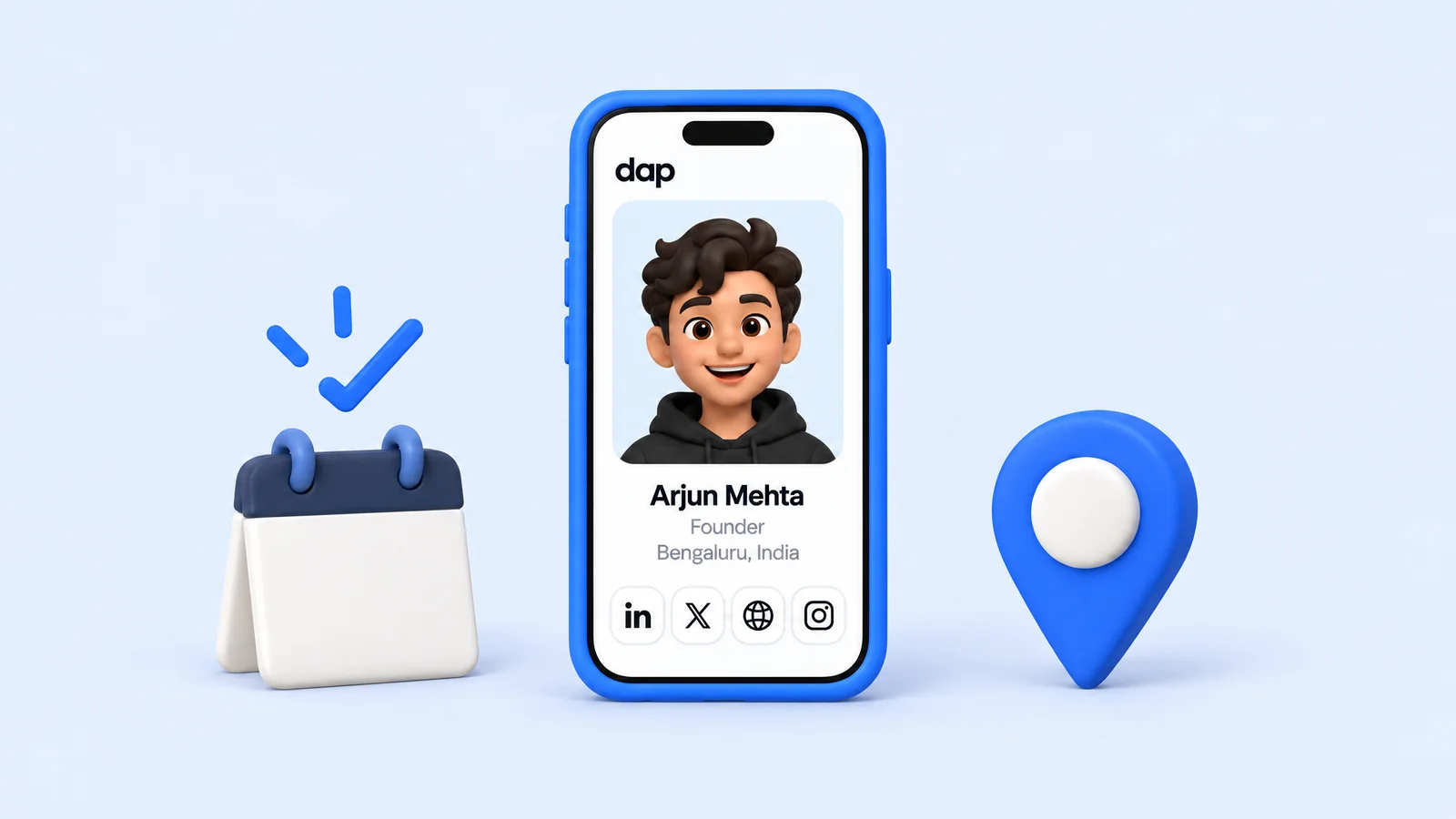
It’s also the whole design of Dap. When two people swap with the app, each saves the other under the event where they met, so two of the three fields fill themselves in and the third is one line. The app hasn’t shipped yet. The page that gets swapped is live, and you can claim yours now.
Until then, a notes app and the same-night habit will get you most of the way. Ravi, if you’re reading this, I’m sorry. I hope the shoes worked out.
Questions people ask
- What should you record about people you meet at events?
- Who they are and how to reach them, where you met, and one line on why the conversation mattered.
- Do I need a CRM to keep track of networking contacts?
- Not necessarily. A notes app with one note per event works if you add a line per person the same night. The habit matters more than the tool.