Most advice about following up after a networking event is about speed. Send it within 24 hours. Send it before you go to bed. Send it from the taxi. Speed helps, a little. It is not why follow-ups fail.
They fail because the message could have been sent to anyone. “Great to meet you last night, let’s stay in touch” arrives fast and says nothing, and the person reading it knows exactly what it means: you’ve kept their name and lost the conversation. I’ve sent that message. I’ve received it from people I liked, and felt the small drop of realising they didn’t remember what we’d talked about either.
A good follow-up carries one specific thing from the night. That is nearly the entire trick.
What a good follow-up actually contains
Strip it down and a follow-up that works has two parts, sometimes three.
- The detail. Something only the two of you would recognise. The essay they recommended, the hiring problem they were stuck on, the bad wine you both pretended to like.
- The next step. What you said you’d do, done. Or a specific ask with a specific time. “Coffee sometime” is not a next step. “I’m near your office Thursday morning” is.
- One link, if it earns its place. Your page, the thing you promised, a calendar slot. Not four links and a deck.
Notice what’s missing. No recap of your career. No “as I mentioned.” No paragraph about how inspiring the event was. They were there.
Follow-up message examples you can steal
These are short on purpose. Swap the bracketed parts for the real thing and resist the urge to pad them.
When you promised something:
Hi Priya, here’s the onboarding teardown I mentioned at [event] after the panel. The part about the empty state is near the bottom. Curious whether it matches what you’re seeing.
When there’s a clear reason to meet again:
Hi Sam, you said the Bengaluru team is stuck on hiring a first designer. I’ve done that twice and got it wrong once. Happy to compare notes. I’m free Thursday after 4 if a call works.
When there’s no agenda, just a good conversation:
Hi Leo, still thinking about your point that every side project dies at the login screen. Here’s my page if you ever want to trade notes on the next one.
The third one is the hardest to send, and the most common situation. You liked them. There’s no deal. Say the specific thing, leave a door open, stop typing.
How soon should you follow up?
Within a day or two is good. Within a week is fine. The window matters less than people think, because the reader doesn’t judge you on timing. They judge you on whether you remembered them.
A specific message on day five beats a generic one on night one. I’d go further: if you only have the generic version, waiting until you can find the detail is usually the better move.
When it’s been two weeks (or two months)
Send it anyway. Admit the gap in half a sentence and get to the point. “This took me longer than it should have” is all the apology anyone needs. People are not keeping score of your inbox. They do notice whether the message is about them.
The real problem with a late follow-up is that the detail has gone. Which brings us to the part nobody puts in the advice.
The follow-up is decided in the room
You can’t write the specific message if you don’t have the specific thing. And by the morning after a busy evening, you mostly don’t. You have a name in your phone with no context, filed under a letter of the alphabet, next to your dentist.
The fix isn’t a better template. It’s keeping two things attached to the person when you meet them: the event, and one line about why the conversation mattered. Where you met is the cue your memory needs to bring the rest back. I wrote more about that in the room is the folder, and about why the generic follow-up gives you away.
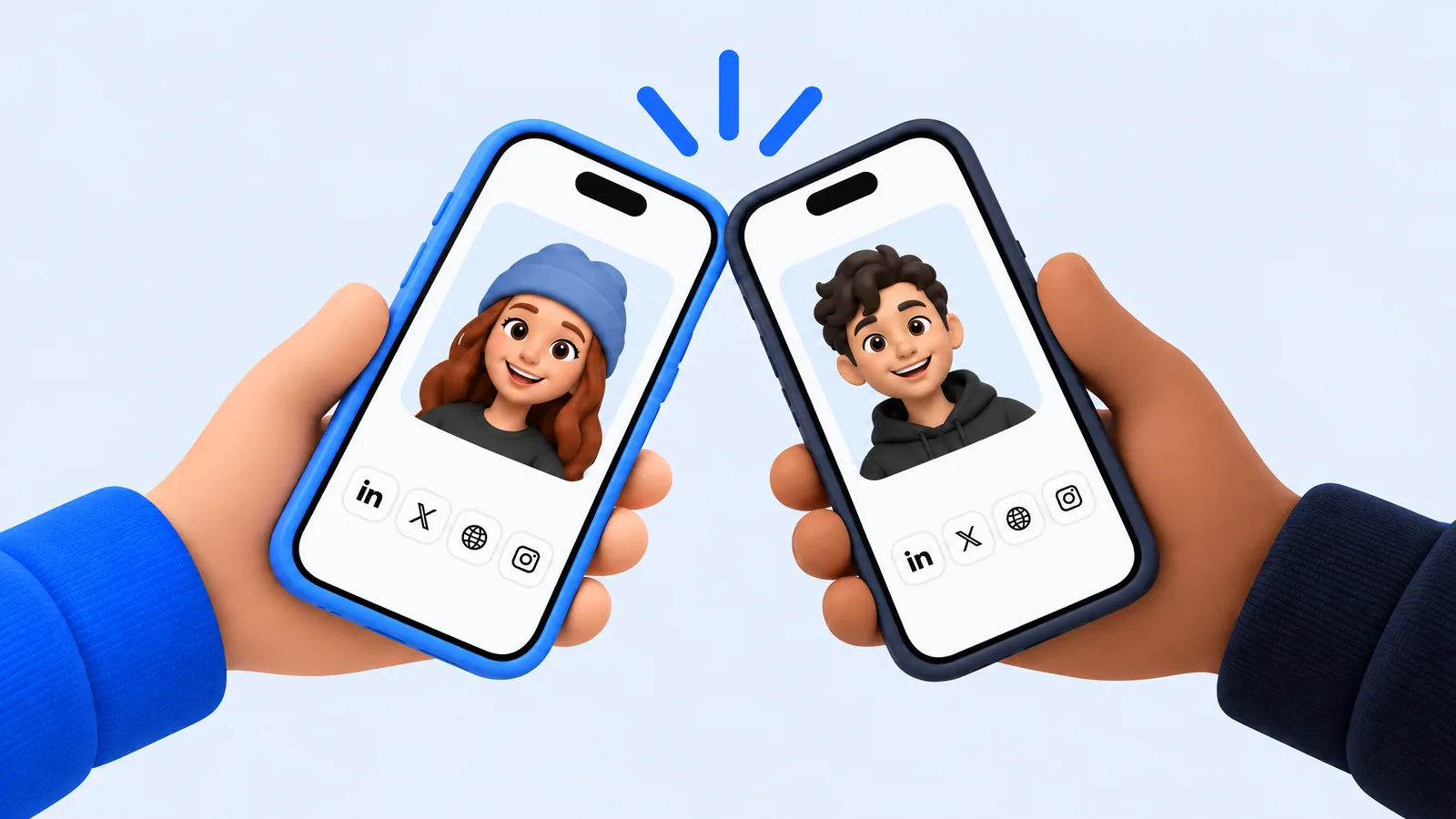
That’s the thing we’re building Dap around. The phone app that saves each connection under the event hasn’t shipped yet. The page you’d put in that third example has: you can claim your Dap page now and have one link that holds your name, what you do, and where to find you.
Then the follow-up becomes the easy part. One detail. One next step. Send.
Questions people ask
- How soon should you follow up after a networking event?
- Within a day or two is ideal and within a week is fine. A specific message on day five beats a generic one on the first night.
- What should a networking follow-up email say?
- One detail only the two of you would recognise, a concrete next step if there is one, and at most one link. Skip the career recap.
- Is it too late to follow up after two weeks?
- No. Acknowledge the gap in half a sentence and get to the point. People notice whether the message is about them far more than when it arrived.