The notes app on the way home is where networking goes to die.
You had a good conversation. You remember the feeling of it, maybe the jacket, and that they were building something in climate or logistics. Or you already lost that part. What you have in your pocket is a name you typed with your thumb while someone else was talking, or a photo of a card you will never open. Three days later the name is still there. The reason you wanted it, the thing you were going to send or ask, has already gone soft.
I used to think this was a memory problem. Get better at names. Say the name once out loud, the way the advice goes, as if pronunciation was the part leaking out of the night. Write a line before you leave the room. I’ve tried the version where you drift toward the drinks so you can type “red glasses, hates cold email” before it evaporates. It works until the fourth conversation. By the eighth the note says “tall, fintech??” and you’re hoping next-week-you is some kind of detective.
A contact is a bad container for a meeting.
It holds a name, sometimes a number, sometimes a company. The meeting was a room, a reason you stopped, and one sentence that made you think you should talk again. Take those away and you’ve saved a stranger with cleaner typography. I still do it. Everyone does. The phone makes the saving feel like an outcome.
Cards are honest about how little they carry, which is why a jacket pocket full of them is such a grim little archive. You spread them on a desk the next morning and try to rebuild a night from logos. The one you actually wanted is usually blank on the back, because you were in the conversation and refused to be the person scribbling through it.
Phone contacts aren’t the upgrade. They’re the same card, sorted A to Z, with a green icon. People who are trying add “met at the thing.” Which thing. What you offered to send. Whether you liked them or were just being polite near the exit. The field doesn’t say. You scroll past it during some unrelated cleanup and delete the row, a little guilty, because you can’t defend it.
I learned the shape of this from a list I would have sworn was complete. Half the rows were names from the night. One row, written in the same minute, was a grocery line. Oat milk. I had the notes app open and my head was already out of the room, so the person and the errand landed in the same place. The oat milk is still funny. The person is a blank I couldn’t rebuild an hour later, still standing outside with the list open. You can be trying, even a little proud of the list, and still file the wrong sentence under the right night.
Thursday is the test, not the doorway of the event. A name surfaces because some system has decided you owe them a message. You can see where they work. You cannot see what you promised, or the reason you wanted the conversation without a pitch sitting between you. So the message comes out vague and warm, and they can tell. Nothing about the radio failed. The file did. It stored a pointer and called that a memory.
What I want after a night of this is smaller than a CRM and pickier than an address book. Who they were, where we met, and why it was worth a Thursday I won’t want to reconstruct from scratch. If I can’t say why, I didn’t need the name. Sales teams will hate that sentence. I’m not writing for the person whose job is to log forty conversations before the flight.
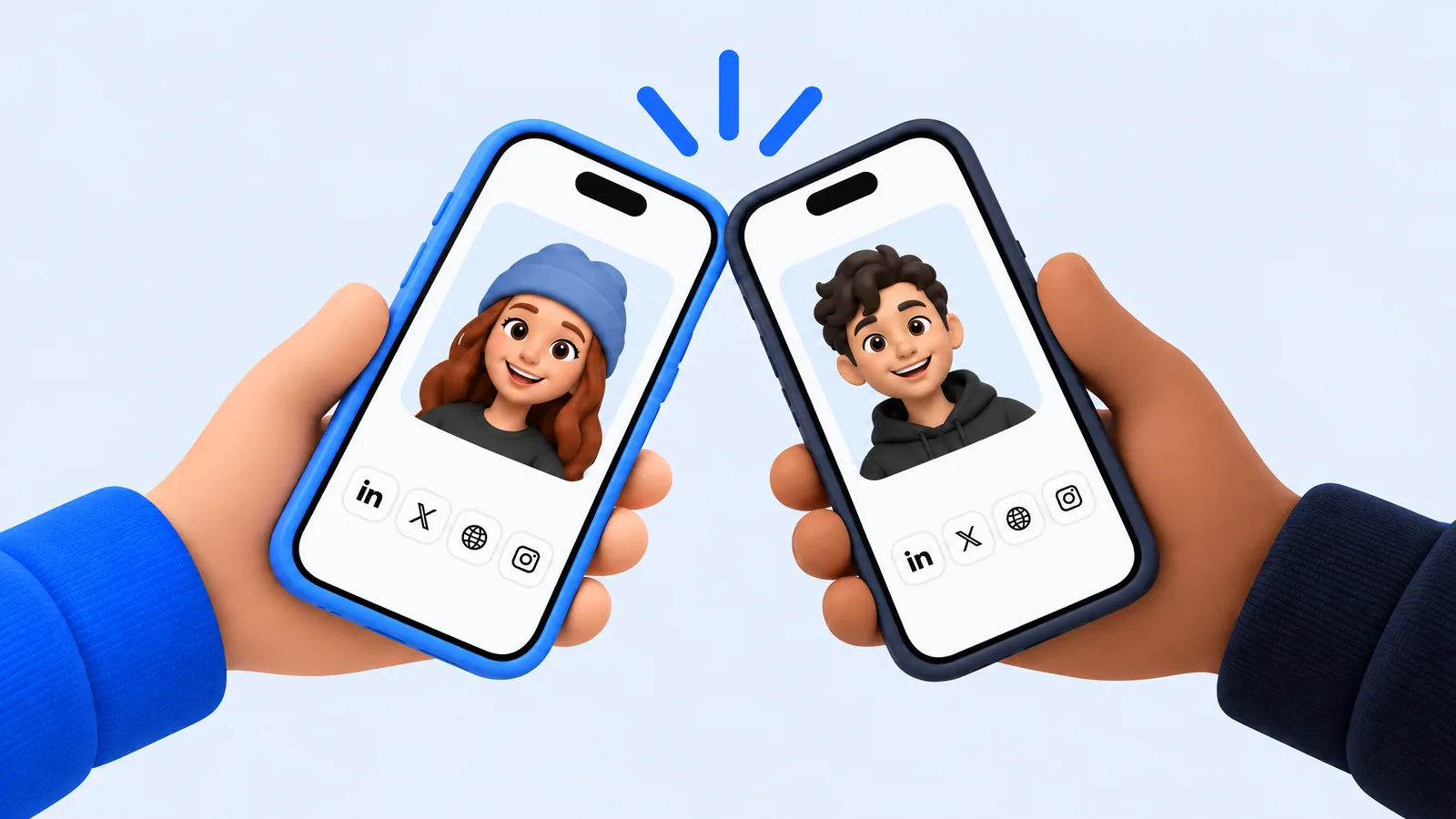
That’s the narrow bet behind Dap. Two phones tap, both profiles come across (the page of links you’d otherwise paste into a chat at midnight), and the connection sits against the event instead of dissolving into a list called Contacts. You can claim that page on the web now. The tap itself, the part that happens in the room, comes with the app, and the app isn’t out. I’m not going to describe a download that doesn’t exist.
I don’t know if “who, where, why” is enough for someone who works a conference like a route. They may want the deal size, the follow-up date, a nudge on Thursday. That software is real, and it feels like homework you assign yourself at 11pm in a hotel you already don’t like. Most conversations I care about aren’t pipeline. They’re “we should actually talk,” and they die because the reason never got stored anywhere the name did.
There’s a genre of advice that says the fix is discipline. Write the note before you’ve left the circle, while their sentence is still the one in your head and not the next person’s. Send something before midnight, while the room is still in your coat. I’ve watched careful people do it. The note becomes “great chat,” which is a blank card with better manners. A room full of new people is a bad place to be your own secretary. You’re supposed to be in the conversation. The record should fall out of the exchange, not out of a second job you perform while nodding at whoever is next.
Keep the reason. The name will sit in your phone either way. The reason won’t, unless something writes it down while you still have it.