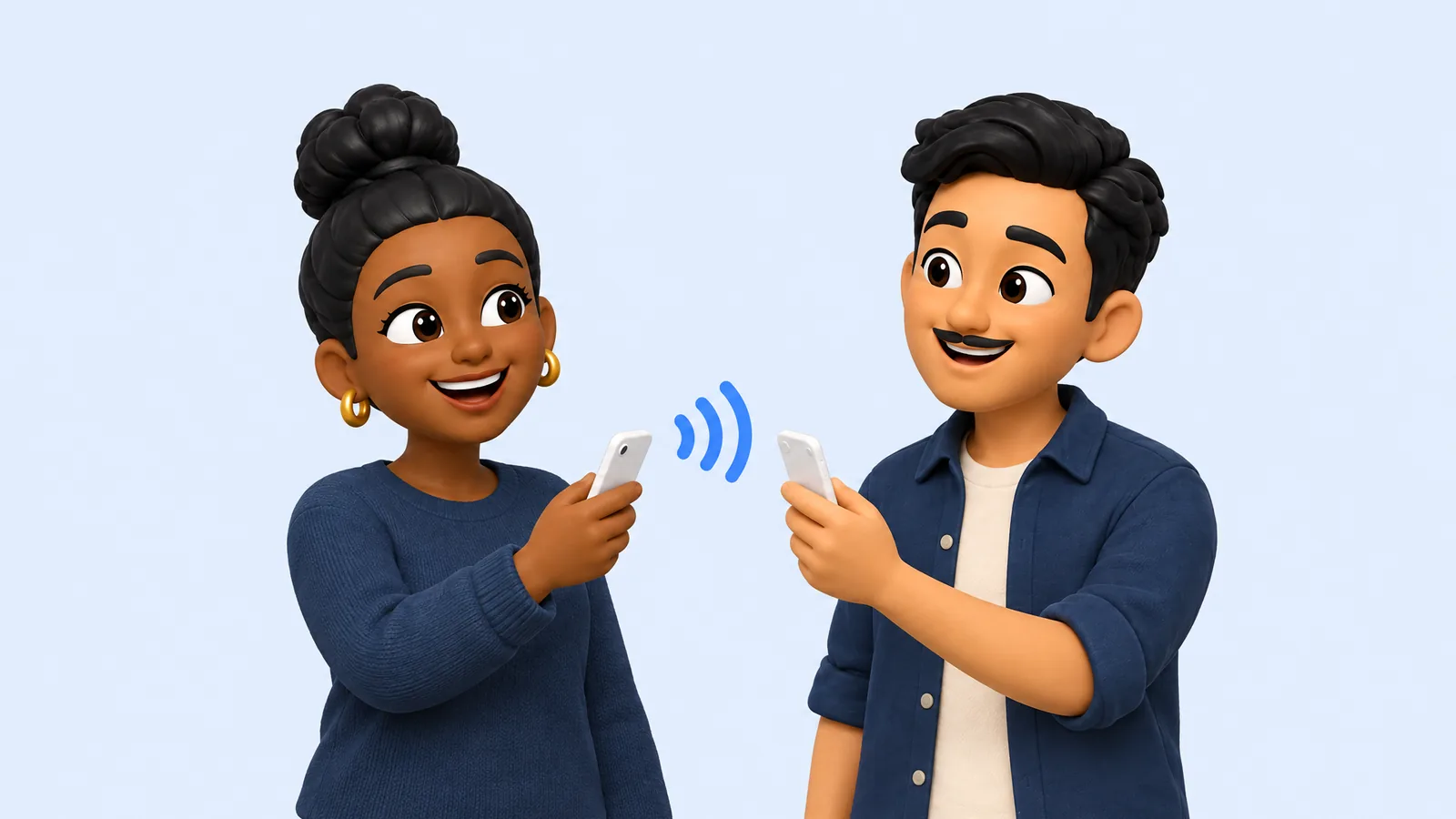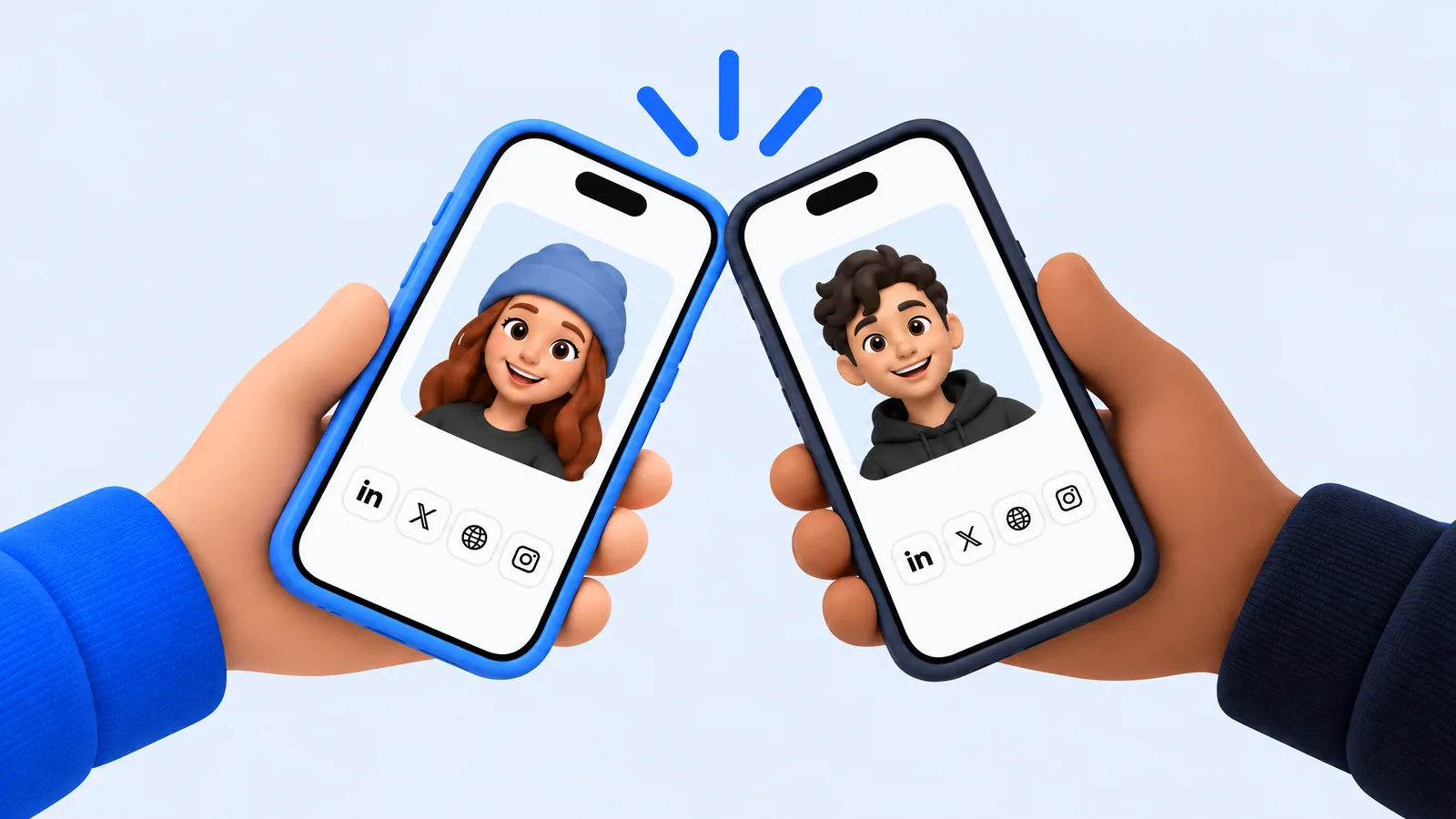
Dap is a networking app for in-person events. Two people tap their phones together, each gets the other’s profile, and the connection is saved under the event where they met. A week later you can open the event and see who you talked to there, instead of scrolling a contact list for a name you half remember.
That’s the whole idea. The rest of this page is the detail: what you can use today, what is still being built, and how it differs from the other ways people swap details at events.
What you can use today: a Dap page
A Dap page is a single page with your name, what you do, and the links you want people to have. It lives at your own address, like yourname.dapapp.site. You can claim one in about forty seconds, without making an account, and it’s free while Dap is being built.
The page is the part you hand to anyone, whether or not they have Dap. Put it in your bio, on a slide, in a follow-up message. I wrote about what belongs on a page like this if you want an opinion on what to put there.
What the app adds
The phone app is the bit that hasn’t shipped yet. When it does, it does two things the page can’t.
First, the swap goes both ways. You tap phones and you both leave with each other’s profile. A QR code or a printed card only works in one direction: someone scans you, and you get nothing back unless you scan them too.
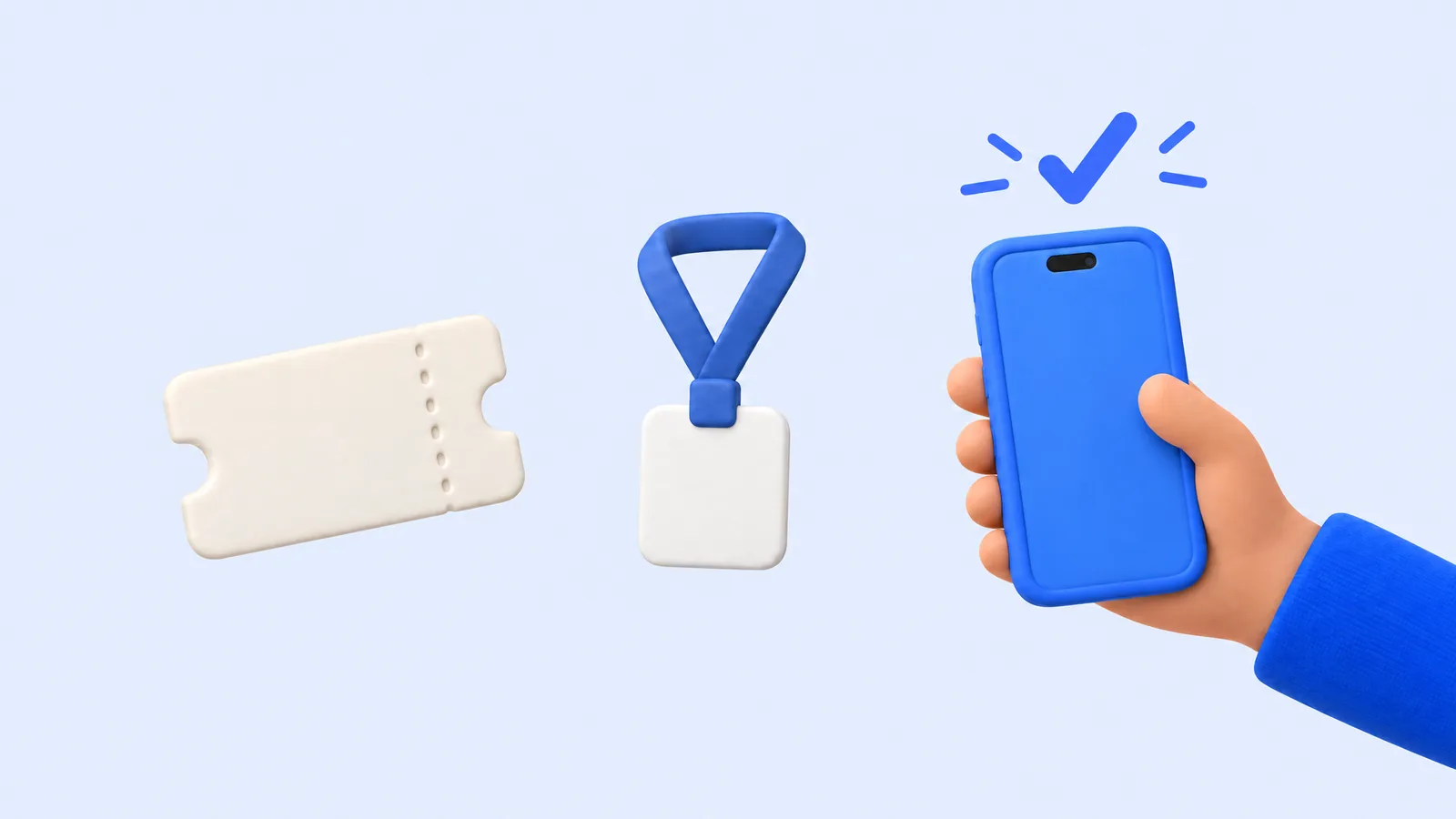
Second, the connection keeps its context. Every person you meet is filed under the event, so the record holds the room as well as the name. That matters more than it sounds. Where you met is the cue that brings the rest of the conversation back, which is the argument in the room is the folder.
Who it’s for
People who go to meetups, conferences, hackathons, demo days and dinners, and who meet more people at them than they can keep straight afterwards. Founders and students are the obvious crowd, but the problem is the same for anyone whose week includes a room full of strangers.
It’s not built for sales teams scanning badges at a booth. That job wants lead capture and a CRM export, and there are tools that do it well. Dap is for the conversations you want to remember because you liked the person.
How Dap is different from a digital business card
A digital business card app replaces the paper card: you share a link or a QR code and the other person saves your details. Dap’s page does that part too. The difference is what happens to the people you meet. A business card stores who someone is. Dap also stores where you met them, which is the part that tends to disappear. There’s a longer comparison in NFC, QR codes, or digital business cards.
About the name
You probably know “dap” as slang for the handshake or fist bump you give a friend. Dap the app is a networking tool, unrelated to the several other things the letters DAP stand for in software and finance. If you searched for us and landed among those, the address to remember is dapapp.site.
If you want to try it now, claim your page. The app that swaps it with a tap is on the way.
Questions people ask
- What is Dap?
- Dap is a networking app for real-world events. Two people tap phones to swap profiles, and each connection is saved under the event where they met.
- Is the Dap app available yet?
- The phone app is still being built. You can already claim a Dap page, a free page with your name, what you do and your links, at your own dapapp.site address.
- Is Dap free?
- Dap pages are free while Dap is being built, and claiming one takes about forty seconds with no account.