Asking for someone’s contact feels awkward when it comes out of nowhere. It stops feeling awkward when you give a reason. “Can I get your number?” is a question about them. “I’ll send you that article, what’s the best way to reach you?” is a question about something you’re already doing. Most people say yes to the second without thinking about it.
Lines that work
Each of these hangs the ask on something real from the conversation. Use the one that’s true.
- When you promised something: “I’ll send you the link. Where’s easiest, LinkedIn or email?”
- When there’s a next step: “I’d like to hear how the launch goes. Can I message you in a couple of weeks?”
- When you want to introduce them: “You should meet a friend of mine who’s hiring for exactly that. Can I connect you two?”
- When you just liked talking to them: “This was the best conversation I’ve had all night. Let’s swap details.”
The last one has no agenda, and that’s fine. Saying you enjoyed the conversation is a reason. People rarely hear it, so it lands.
Ask for the channel, not the number
“What’s the best way to reach you?” lets the other person choose. Some people hand out their phone number freely; others would much rather you found them on LinkedIn or Instagram. Letting them pick takes the pressure off both of you.
Offer yours first
If you’re nervous about asking (there’s more for that in networking tips for introverts), give first. Hold up your QR code or say your handle and let them decide whether to send theirs back. The catch is that a lot of people scan you and forget the return half, so follow it with “and I’ll find you, what’s your handle?” If you want a quick comparison of ways to swap, there’s one in how to exchange contact info at a networking event.
When to ask
Near the end of the conversation, when you’re both about to move on. Asking in the first minute feels like collecting. Asking as you leave feels like you want to continue. If you need an exit line anyway, this is it: swap details, then go and get a drink.
If they say no, or dodge
Take it lightly. “No worries, good to meet you” and move on. Most dodges aren’t personal. They’re tired, or private, or already have three hundred unread messages. If you’re at the same event again, you can try then.
Save the reason with the contact
The reason you asked is the thing you’ll need when you write to them, and it’s the first thing you’ll forget. So save it with them before you leave: the event and the one line. “Priya, hiring a designer, send the onboarding article” turns into a good follow-up message almost on its own. The guide to following up after a networking event picks it up from there.
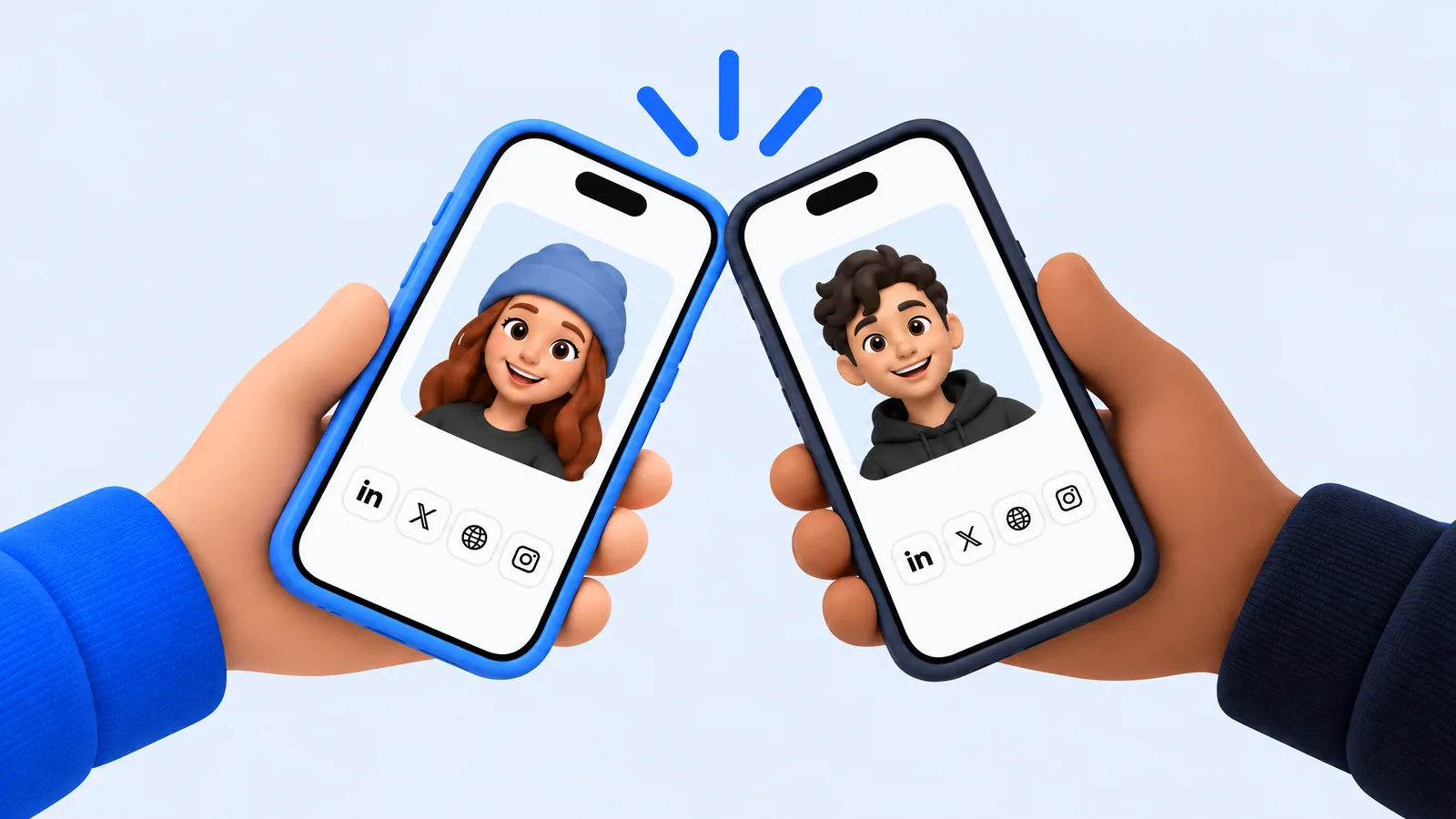
Dap is built so that part happens without you typing it. The app, still on the way, swaps both profiles with a tap and saves the person under the event. Until then you can claim a Dap page, which gives you one link to offer when someone asks for yours.
Questions people ask
- How do you ask for someone's contact professionally?
- Tie the ask to something from the conversation, such as sending them a link or making an introduction, and ask what the best way to reach them is.
- When should you ask for someone's contact at an event?
- Near the end of the conversation, as you're both about to move on. It reads as wanting to continue rather than collecting contacts.