Popl, Blinq and HiHello are digital business card apps. Each replaces the paper card with a link, a QR code or an NFC tap, and each leans toward a different buyer. Dap overlaps with them on the card part and differs on what happens after you meet someone. Here’s the short version, then the detail.
- Popl if you want physical NFC products (cards, stickers, tags) and lead capture at events.
- Blinq if you’re rolling cards out to a team and want admin controls and CRM integrations.
- HiHello if you’re an individual and want a capable free plan.
- Dap if your problem is remembering who you met at events, not handing out your details.
Plans and prices change often in this category, so check each product’s own pricing page before you pay for anything.
Popl: built around the tap
Popl is best known for its hardware: NFC cards and tags that open your profile when someone holds their phone near them. It also offers lead capture for people who meet a lot of prospects at events. If you like having something physical to hand over, or you staff booths at trade shows, it’s the one to look at first.
Blinq: built for teams
Blinq is the one most often recommended for companies. The appeal is central management: an admin can issue cards to a whole sales team, keep the branding consistent, and send new contacts into the CRM the team already uses. For a solo user, that machinery is more than you need.
HiHello: the free starting point
HiHello is the usual recommendation for individuals who don’t want to pay. Its free plan covers more than most, including several cards, which suits someone who wants a work card and a personal one.
Where Dap is different
All three are good at the moment of sharing. They’re less concerned with the person you shared with. You get their details, often in your phone’s contacts, and the context of the meeting is gone by morning: where it was, and what you talked about.
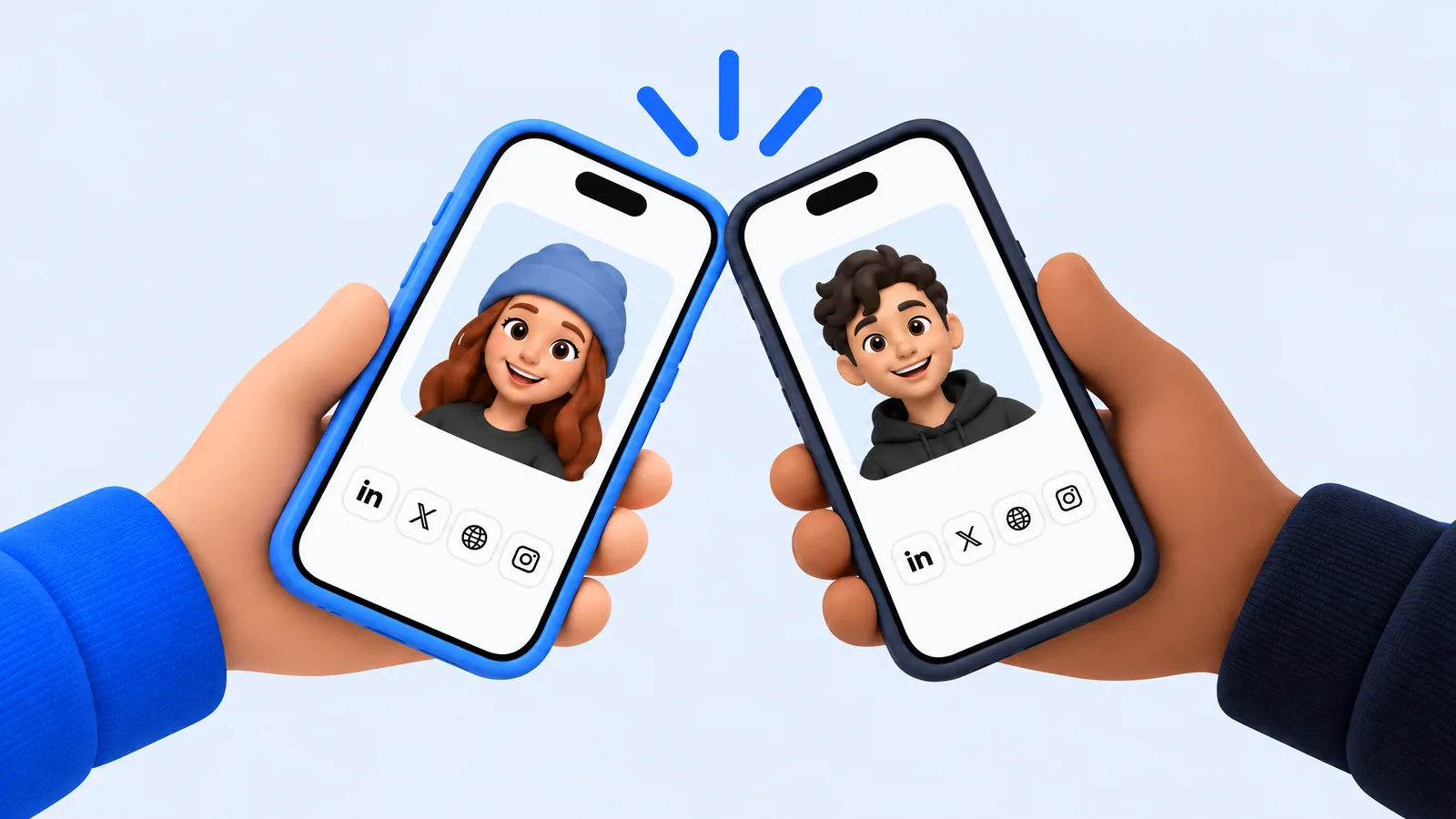
Dap is a networking app built around that second part. When the app ships, two people tap phones and both get the other’s profile, so the swap goes both ways. Then each connection is saved under the event where you met, so a week later you can open the event and see who was there. The argument for filing people by event is in the room is the folder, and there’s more on what Dap is in what is the Dap app.
Where Dap is the wrong pick
Today, quite a few places. The phone app isn’t out yet. What you can use now is a Dap page: your name, what you do and your links at your own address, free while Dap is being built. There are no team accounts, no CRM sync and no NFC hardware. If you need to issue cards to forty salespeople by Friday, Blinq or Popl will serve you better.
Dap is for people who go to meetups, hackathons and conferences because they want to meet people, and who keep losing track of them afterwards.
How to choose
Start from the problem you have. If people struggle to get your details, any of the four will fix that. If you’re buying for a company, pick on admin and integrations. If the problem is that you meet good people and can’t place them a week later, the card was never the issue.
If that last one is you, claim your Dap page now and you’ll have it ready when the app arrives. There’s also a broader comparison of the formats themselves in NFC, QR codes, or digital business cards.
Questions people ask
- What is the difference between Popl and Blinq?
- Popl is best known for NFC cards and tags and for lead capture at events. Blinq is the usual pick for companies issuing cards to a team with admin controls and CRM integrations.
- Is Dap a digital business card?
- Partly. A Dap page does the card's job. The Dap app, still on the way, adds a two-way swap when phones tap and saves each person under the event where you met.