The best conversation I had at a conference last year happened in the queue for bad coffee, between sessions I can no longer name. That’s not unusual. Ask anyone who goes to a lot of these and they’ll tell you the talks are the excuse. The hallway is the conference.
So most conference networking advice has the emphasis in the wrong place. It obsesses over the opener and the elevator pitch, and skips the two things that decide whether any of it was worth the ticket: how you choose where to stand, and what you do that night.
Before: pick three, not thirty
Look at the speaker list and the attendee app if there is one. Pick three people you’d genuinely like to talk to and one reason for each. Not a pitch. A reason. “She wrote the post about pricing that changed how we charge” is enough.
Three is a number you can hold in your head on day two, when you’re tired and your feet hurt. Thirty is a spreadsheet you will abandon by lunch.
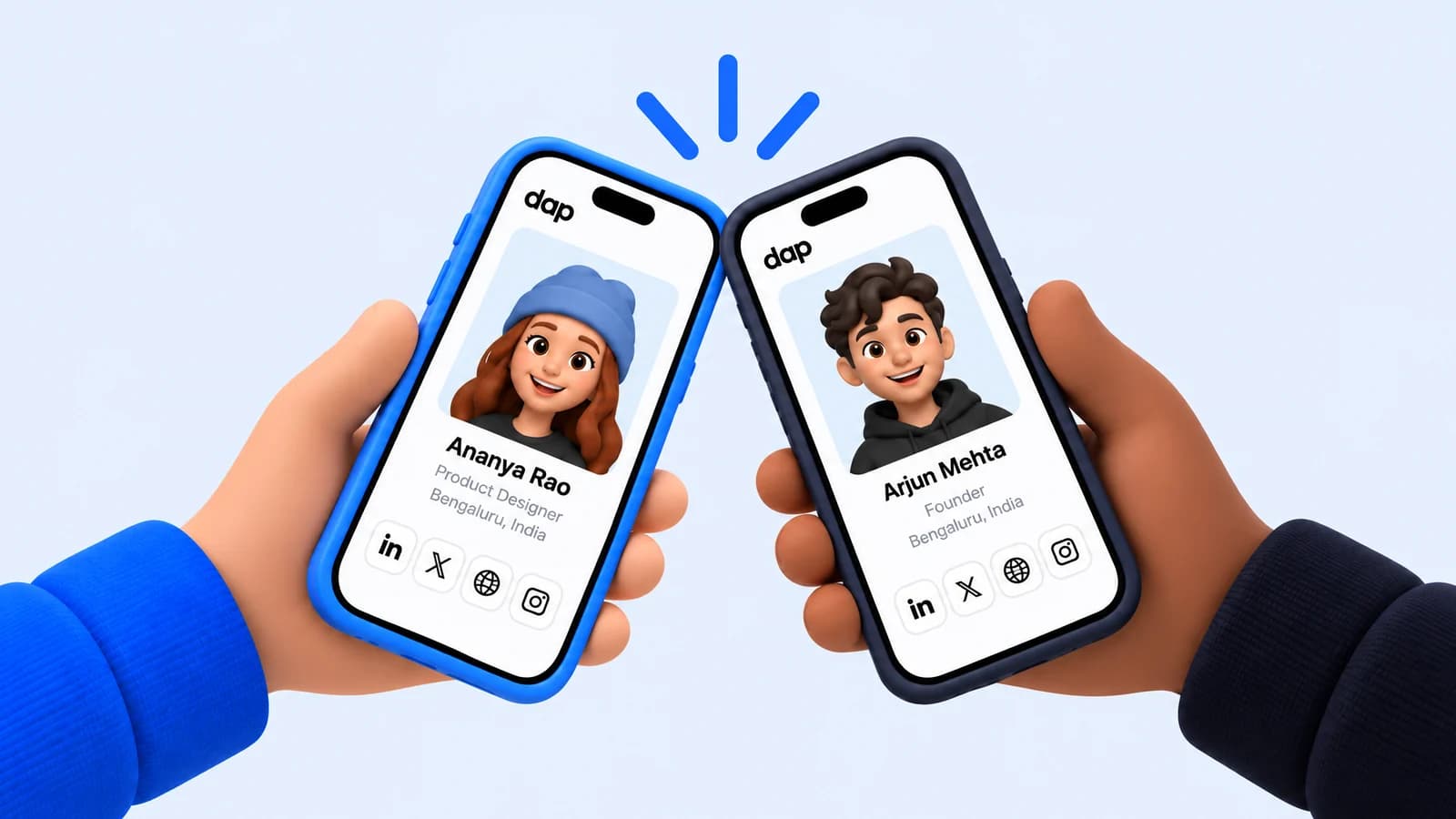
Then sort out the page you’ll hand people. One link, your name, what you do, where to find you. If you don’t have one, claim a Dap page; it takes a couple of minutes. You don’t want to be spelling an email address across a noisy expo floor.
During: stand where conversations start
A few places reliably beat the main hall.
- The coffee queue. Everyone is waiting, nobody is busy, and “is this the decent coffee or the other one” is a perfectly good opener.
- The front of a small session. Fewer people, a shared topic, and you can talk to the speaker after without a crowd.
- The edge of the lunch area. People eating alone are often relieved when someone sits down.
- The last half hour of the evening event. The room thins out and the people left are the ones who wanted to talk.
Skip the sponsor booths unless you want to buy something. That’s a sales conversation, which is fine, but it’s a different one.
Ask the second question
Everyone asks what you do. Almost nobody asks the follow-on, and that’s where the conversation actually starts. “What are you stuck on right now?” “What made you come to this one?” “Which talk was worth it?”
The second answer is also the thing you’ll need for the follow-up. Their job title won’t help you write a good message on Thursday. The problem they’re stuck on will.
Leave well
Conversations at conferences are supposed to end. People feel trapped when they can’t see the exit, so give them one. “I’m going to grab the next session, but let’s swap details” is warm and clear. Swap, say the one thing you’ll do next, and go.
Don’t stand there typing a note while they watch. I’ve argued before that logging it in the room means you’ve already left. Walk ten metres first.
After: the evening sort
This is the part that turns a conference into anything. Before you sleep, go through the day’s connections and write one line for each: where you met and why it mattered. “Coffee queue, day one. Hiring a first designer, wants the job post I mentioned.” Two minutes per person, tops.
Do it that night. By the flight home, the people blur together and the line you’d have written is gone. A three-day conference without an evening sort is three days of names with nothing attached.
Then follow up within the week, using that line. I wrote up how to follow up after a networking event with a few message examples, if you want a starting point.
Where Dap fits
That evening sort is the chore we built Dap to remove. The idea is that each person you meet is saved under the event where you met them, automatically, so “who was that from day two” has an answer. The phone app that does this hasn’t shipped yet. The page you’d share at the conference is live now.
Until the app exists, the sort is on you. It’s worth it. The conference is three days. The people you met there could be around for years.
Questions people ask
- How many people should you aim to meet at a conference?
- Pick three people you want to talk to, each with a reason. Anything beyond that is a bonus, and three is a number you can still remember on day two.
- Where is the best place to network at a conference?
- The coffee queue, the front of small sessions, the edge of the lunch area, and the last half hour of the evening event.
- What should you do after a conference?
- Each night, write one line per new person: where you met and why it mattered. Then follow up within the week using that line.